Marie Kortam, sociologist, Associate Researcher, Institut français du Proche-Orient (Ifpo) https://kortam.fr/
Abstract. The documentary NAZA (Yuval Abraham and Rachel Szor, 2026) gathers the testimonies of twenty-four soldiers and intelligence officers who took part in the genocide in Gaza. Its title is the military acronym for “collateral damage”. This paper reads the film not as a revelation of crimes already established by United Nations bodies and international courts, but as evidence of how mass destruction becomes ordinary for those who produce it. It identifies three mechanisms: the conversion of persons into data, the transformation of the home into a target and a performance, and the institutional protection of the system against accountability. Drawing on psychoanalysis (Freud), clinical psychosociology (Barus-Michel), clinical work on perpetrators (Fanon, Lifton, Sironi) and settler colonial studies (Wolfe), it then asks who the perpetrators are, and why placing them outside humanity would repeat the very logic of the destruction. It ends with the responsibility of the third states, Switzerland included, that claim to uphold international law.
1. Introduction: the question that remains after the film
I watched NAZA, and one question has stayed with me since: how can human beings take part in such destruction, then return home and resume their ordinary lives? One of the soldiers interviewed went back, after his deployment, to his studies in clinical psychology. The question is not rhetorical. It is a sociological question about the conditions under which participation in mass violence becomes compatible with an ordinary self-image.
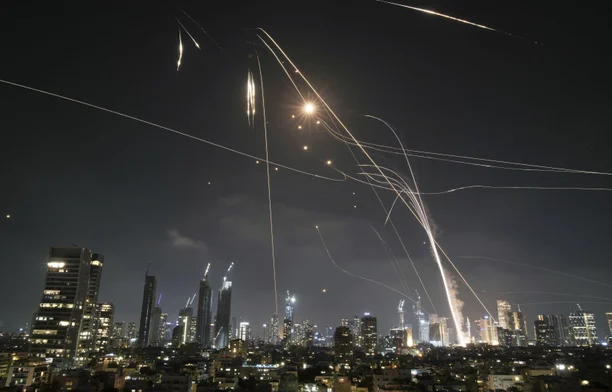
The film, directed by Yuval Abraham and Rachel Szor (two of the four directors of the Oscar-winning No Other Land) and produced by The Guardian, is built on night-time interviews conducted on Tel Aviv rooftops between 2023 and 2025 with twenty-four soldiers and intelligence personnel, most of them from intelligence units. It received the Special Jury Prize at the 83rd Venice Film Festival in September 2026. Its title, NAZA, comes from nezek agavi, the Israeli army’s term for collateral damage, that is, the estimated number of civilians expected to die in a given strike.
The words we use to describe what has happened in Gaza are essential: war crimes, crimes against humanity, genocide. They are also increasingly grounded in institutional findings. On 26 January 2024, the International Court of Justice ordered provisional measures in South Africa v. Israel under the Genocide Convention. On 21 November 2024, Pre-Trial Chamber I of the International Criminal Court issued arrest warrants for Benjamin Netanyahu and Yoav Gallant. On 16 September 2025, the UN Independent International Commission of Inquiry concluded that Israel has committed genocide in Gaza (OHCHR 2025). Yet these legal categories do not, by themselves, show the chain of units, procedures, technologies and justifications that make such destruction possible, acceptable and, for some, a source of satisfaction. This is what the film exposes, and this is what the present paper analyses.
A word on the evidence. The testimonies are anonymous, the voices distorted, the faces in silhouette. The army concerned has rejected the film as a manipulative depiction of reality and disputes the casualty ratios it presents.[1]
The Guardian, which produced the film, states that the accounts were checked against leaked documents and more than one hundred interviews, and much of the content had already appeared in its own investigations since 2024. I treat the testimonies as what they are: first-person accounts that document, from inside the chain of command, a genocide whose victims are Palestinians. The film chooses to let those who carried it out speak. That choice does not displace the victims. It turns the perpetrators into witnesses against the system they served, and every testimony is about the destruction of Palestinian lives, homes and history.
2. From persons to data: the bureaucracy of targeting
The first mechanism the film reveals is the conversion of human beings into data, of homes into coordinates and of deaths into variables. The systems are now known by name. Lavender, an artificial intelligence system first reported in April 2024, at one stage listed some 37,000 Palestinians as potential targets on the basis of their apparent links to Hamas, with one user describing twenty seconds of human review per target (McKernan and Davies 2024). Habsora(“The Gospel”) generated building targets, producing what one interviewee calls a “factory of targets”. A third system, Where’s Daddy?, was used to track marked individuals and to strike them once they had entered their family homes.
The film gives these systems a human texture that the earlier reporting could only describe. Intelligence officers could access phones across Gaza, including children’s phones. A child calls his mother and tells her that his father is home; that sentence becomes an input in the targeting process, and the house can then be bombed with everyone inside it. A child speaking to his mother, a family gathered in its home, a house that should be a place of safety: each becomes a link in a military decision-making chain. According to the testimonies, a name saved in a contact list (for example, “Ahmed, Hamas”) or a connection to someone associated with Hamas could contribute to a person entering the targeting process. A name, a number, an association. At what point does information become a death sentence? And who verifies what that information actually means about the person it identifies?
What is at stake here is not artificial intelligence as such. It is the decision-making system built around it: how categories are produced, how suspicion becomes data, how data become targets, and how human consequences disappear behind screens. Lucy Suchman (2020) has shown that algorithmic warfare relies on a “reinvention of accuracy”: the precision of the technical apparatus is asserted while the categories it operates on (who counts as a combatant, what counts as a link) remain thin, circular and unexamined. The film shows the result. Precision of the strike coexists with indeterminacy of the target.
The acronym that gives the film its title condenses this logic. Each potential target was assigned a NAZA value, the number of civilians expected to die. According to the testimonies, strikes below a certain value required no special approval, while higher values could be authorised at a higher level. One officer explains the threshold he was prepared to accept; others say that, in the first weeks of the war, NAZA “wasn’t an issue”. The word itself is revealing. Human beings become a margin in a calculation. Entire families can be inside a house that is deliberately destroyed to reach one person; their presence is known, and it does not necessarily prevent the strike.
Eyal Weizman (2011) has called this the economy of the “least of all possible evils”: the language of proportionality, intended to restrain violence, can become the very instrument that authorises it, by translating every death into an acceptable quantity. The calculation does not prevent killing; it administers it. Its outcome is visible in the army’s own figures. According to an investigation published by The Guardian, a classified military intelligence database listed, as of May 2025, some 8,900 named Hamas and Islamic Jihad fighters as dead or probably dead, when the overall death toll had passed 53,000, implying that at least 83 percent of those killed were civilians (Graham-Harrison and Abraham 2025). The army called the figures incorrect without saying which. The gap between the calculation and its results is not a malfunction of the system. It is the system’s normal output.
Zygmunt Bauman (1989) argued that modern bureaucracy makes mass violence possible by fragmenting tasks and lengthening the distance between the act and its consequence, so that each participant performs a technical operation whose moral meaning is removed from view, a process he called adiaphorisation. Targeting software, screens and spreadsheets are a contemporary form of this distance. But the film also shows the limits of the distance thesis, which brings us to the second mechanism.
3. From the home to the record: domicide as performance
The destruction of Gaza appears organised at successive scales: neighbourhoods, blocks, buildings, apartments, houses. One interviewee describes maps on which inhabited areas were marked in purple and destroyed ones in white; the objective was to turn the purple squares white, “like a video game”. The Rimal neighbourhood, described in the film as resembling Tel Aviv, was razed. The territory becomes a succession of zones to be cleared, structures to be destroyed and targets to be counted. The UN Special Rapporteur on adequate housing, Balakrishnan Rajagopal, has proposed the term domicide for this systematic destruction of homes and conditions of habitation, and has called for its recognition as a distinct crime under international law (Rajagopal 2022).
The film adds something the concept does not capture on its own: destruction as performance. One soldier boasts of having set a record by burning down a house in one minute. To do so, soldiers used what they found inside, including the family’s olive oil and flammable products from the kitchen and the refrigerator. A Palestinian family’s olive oil, kept for everyday life and carrying the weight of land, harvest and continuity, becomes the means of burning down that family’s own house. The act is then narrated as an achievement. “We erased history,” another soldier says.
Here the violence is not mediated by screens. The testimonies describe people displaced from north to south being targeted, starving people approaching food distribution points being shot by snipers, injured people on the ground struck again, bodies left in the streets and exposed to dogs. The soldiers see the bodies. They witness the consequences. And the machinery continues.
This is where the questions become unbearable, and where the sociology of perpetration offers tools rather than answers. Herbert Kelman (1973) identified three conditions under which ordinary moral restraints against violence are weakened: authorisation (the act is ordered or sanctioned by legitimate authority), routinisation (the act becomes a repeated procedure that no longer calls for a decision) and dehumanisation (the victims are excluded from the moral community). Each is visible in the film. Authorisation appears in the approval levels attached to NAZA values. Routinisation appears when interviewees describe killing as office work and themselves as “cogs”. Dehumanisation appears in the conviction, repeated by several of them, that there were “no innocents in Gaza”.
Albert Bandura (1999) describes the same process from the side of the individual as moral disengagement: euphemistic labelling, displacement and diffusion of responsibility, minimisation of consequences and attribution of blame to the victims. NAZA is itself an instance of euphemistic labelling: a technical acronym that renders the death of a child sayable. Christopher Browning’s study of a German reserve police battalion (Browning 1992) remains a necessary reminder that such mechanisms do not require exceptional individuals, only ordinary ones placed in an institutional setting that rewards conformity.
But the film forces a correction to a common reading of these theories. Dehumanisation does not necessarily mean no longer seeing the other person. It can mean seeing their suffering, seeing their body, knowing the consequences of one’s actions, and continuing regardless. Some interviewees describe a desire to raze Gaza from the start and a satisfaction associated with the scale of the destruction. One, asked whether he took part in a genocide, answers yes. These testimonies do not describe a moral blindness produced by distance. They describe a moral order in which the destruction of Palestinian life has been made legitimate. This is what Achille Mbembe (2003) named necropolitics: sovereignty exercised as the power to decide who may live and who may be exposed to death.
4. Neither monster nor stranger: the psychic economy of destroying the other
After the film, a further question imposes itself, one that sociology alone cannot close: how are we to live in a world that contains such persons? I do not know how to name them. They are not monsters in the sense of creatures foreign to our species, and the word “animal” would wrong animals, which do not organise destruction, record it and boast of it. One is tempted to say that they belong to another order altogether, as if they had come from elsewhere. I want to hold this question open rather than close it too quickly, because it is the honest residue of watching the film. But I also want to examine it, because the temptation to place perpetrators outside humanity repeats, in reverse, the very gesture that made the destruction possible.
That gesture has a name in the language of the war itself. On 9 October 2023, announcing a complete siege of Gaza, Defence Minister Yoav Gallant declared that Israel was fighting “human animals”, a statement the International Court of Justice cited in its order of 26 January 2024. Frantz Fanon (1961) had already shown that the coloniser’s language about the colonised is a zoological language, and that this vocabulary is not an excess of words but a condition of colonial violence. To answer the perpetrators by expelling them in turn from humanity would be to accept their grammar. The more troubling conclusion is the one that psychoanalysis and clinical psychosociology force upon us: these are human acts, carried out by people who remain, in most of their lives, unremarkable.
Freud’s writings on war offer a first key. In 1915, in the midst of the First World War, he described the disillusionment of citizens who discovered that the state, which forbids the individual to do wrong, permits itself every violence once at war, and that its members, released from the fear of social sanction, commit acts their civilisation seemed to exclude (Freud 1915). Restraint, he suggested, had never rested on a transformation of the drives, only on the fear of the community’s judgement. In Group Psychology and the Analysis of the Ego, he added that members of a crowd or an army put the leader, or the leading idea, in the place of their ego ideal (Freud 1921). Conscience is not abolished; it is delegated. The soldier who calls himself a “cog” describes, in his own words, this transfer of moral judgement to the institution.
Jacqueline Barus-Michel’s clinical psychosociology moves the analysis from the drive to the social bond. For her, sociality is paradoxical: the bond that leads human beings to seek the cooperation of their fellows also makes them react aggressively to difference, and a group can be held together by shared enjoyment or shared defence as much as by shared purpose (Barus-Michel 2012). In crisis, identity under threat seeks its unity in designating an other to be expelled or destroyed (Barus-Michel 2003). Read through this lens, the satisfaction some soldiers express at the scale of the destruction is not individual sadism. It is a collective jouissance that binds the group, and a defence against an anxiety far older than 7 October: the anxiety that has accompanied the colonial project from its beginning, the knowledge, never fully repressed, of living on land taken from others. Destroying those others, their homes and their traces restores, for the group, the illusion of its own legitimacy. The record of a house burned in one minute, recounted to comrades, is a ritual of belonging.
Clinical work on perpetrators confirms that such people are made, not born. Françoise Sironi (1999), who treated survivors of torture, showed that torturers are produced by a training that breaks their earlier attachments and binds them to a new group in which violence becomes the proof of membership. Robert Jay Lifton (1986), studying the Nazi doctors, described doubling: the formation of a second, functional self that carries out the killing while the first self remains available for family, profession and ordinary life. Doubling is the most precise answer we have to the question this paper began with. The soldier who returns from Gaza to his clinical psychology studies is not a stranger to himself; he has two selves, and the institution has taught him to keep them apart. Fanon (1961) observed the limits of that separation in his clinical cases from the Algerian war, among them a European police inspector who tortured prisoners as part of his work and could no longer stop himself from beating his wife and children, even his twenty-month-old baby. The violence crosses the threshold of the home that the perpetrator believes he has closed.
These psychic mechanisms do not float free. They are mobilised by a structure. Patrick Wolfe (2006) defined settler colonialism as a structure rather than an event, governed by a logic of elimination of the native: the aim is not only to defeat a population but to remove its presence from the land. This gives meaning to details that might otherwise seem incidental. The family’s olive oil, product of the trees that root Palestinians in their land, used to burn their home. A soldier saying “we erased history”. Neighbourhoods turned from purple to white on a map. The destruction of the Palestinian home, past and future is the point, not a side effect.
Who, then, are they? Not aliens. Human beings, formed by institutions, bound by a group, authorised by a state and carried by a settler colonial project, who have learnt to destroy and then to go home. This is what makes them so hard to think about. It is also precisely why they must answer for what they have done.
5. From violence to impunity: the protection of the system
The third mechanism concerns not the production of violence but its protection. The film presents interviewees who worked in what they call “Bibi’s Department”, a unit described as serving the Prime Minister’s office in response to growing international pressure. According to their accounts, it surveilled Palestinian survivors who might bring cases before the International Criminal Court and gathered compromising information on them (extramarital relationships, homosexuality, other intimate details) in order to pressure them and deter legal action; one officer states that cases were withdrawn as a result (Mulla 2026). These are, again, anonymous allegations that the army disputes. They are, however, consistent with an earlier investigation by The Guardian, which documented a nine-year campaign, overseen by senior officials and involving the Shin Bet, military intelligence and Unit 8200, to surveil, hack, pressure and allegedly threaten ICC Prosecutors Fatou Bensouda and Karim Khan, other UN officials and Palestinian human rights organisations (Davies et al. 2024). International lawyers consulted by the newspaper noted that such conduct may fall under Article 70 of the Rome Statute, which criminalises offences against the administration of justice.
The point here is analytical. Intimate information, once turned into a tool of intimidation, extends the logic of targeting from the battlefield to the courtroom. The same infrastructure that converts phone data into strike coordinates converts private lives into leverage against witnesses. Impunity is not an absence; it is produced.
The film closes this sequence with archival footage of Benjamin Netanyahu, years before his premiership, defining terrorism by its deliberate targeting of civilians. In Terrorism: How the West Can Win (1986), the volume he edited, terrorism is defined as “the deliberate and systematic murder, maiming, and menacing of the innocent” for political ends; he developed the argument in Fighting Terrorism (1995). Watched in the light of the testimonies, the scene produces more than irony. It exposes a structural double standard: violence against civilians is condemned when committed by the other, and administered through acceptable margins when committed by oneself.
The reaction to the film in Israel prolongs this protective function. The Prime Minister called it antisemitic incitement; the chief of staff vowed to identify the soldiers who had spoken; government ministers called for the directors to be stripped of their citizenship, and bills were backed to penalise those who “defame” the army abroad. The directors’ families were harassed. What is targeted here is testimony itself. A system that punishes those who speak is telling us something about what it needs to remain silent.
6. Responsibility beyond the trigger
I refuse to let responsibility disappear behind the figures of a few soldiers or a few leaders. But precision is needed, because responsibility is not one thing.
Hannah Arendt (1987 [1968]) distinguished guilt, which is always personal and must be established for specific acts, from political responsibility, which members of a community bear for what is done in their name. This distinction matters doubly here. It rules out the attribution of guilt to an entire population. It also rules out the opposite move, which reduces a collective practice to the deviance of a few individuals. Mass violence does not happen outside society. It is embedded in institutions, norms and practices: in a society where military service and reserve duty involve a large share of the population, war mobilises far more people than those who pull the trigger. Violence depends on those who identify targets, those who approve them, those who organise operations, those who build and maintain the systems, the narratives that legitimise all of this, and the citizens who support, contest or accept it.
Iris Marion Young’s (2011) social connection model helps to think the wider circle. For Young, those who participate in and benefit from processes that produce structural injustice share a forward-looking responsibility to transform them, even when they cannot be blamed for any specific harm. This extends the question beyond Israel. It concerns the states that supply arms, technology and cloud infrastructure, the companies whose platforms store intercepted Palestinian communications, and the governments that maintain ordinary political, diplomatic and economic relations as if nothing had been documented.
This is not only a moral claim. Under Article I of the Genocide Convention, states undertake to prevent genocide; the International Court of Justice held in Bosnia and Herzegovina v. Serbia and Montenegro (2007) that this obligation arises as soon as a state learns, or should normally have learned, of a serious risk, and requires it to employ all means reasonably available. Common Article 1 of the Geneva Conventions obliges all High Contracting Parties to respect and to ensure respect for the Conventions. Geneva, where Switzerland acts as depositary of those Conventions, is not a neutral place from which to ask these questions.
7. Conclusion: a double crime, and the refusal to share the world with it
The rule of law is necessary. It is not enough. Independent investigations, trials and judgments established on evidence, applied to everyone without exception, remain the minimum that justice requires. But a paper that ends with procedure alone would let the reader forget what the procedure is for. So I end with four names and one refusal.
The first name is colonialism. What the film shows is not a war that went wrong. It is colonial violence carried to genocide. Colonisation was already a crime before October 2023. On 19 July 2024, the International Court of Justice concluded that Israel’s continued presence in the Occupied Palestinian Territory is unlawful, that it must end as rapidly as possible, that all new settlement activity must cease and that settlers must be evacuated (ICJ 2024b). The Rome Statute makes the transfer by an occupying power of its own population into the territory it occupies a war crime (Article 8(2)(b)(viii)). The genocide in Gaza is committed on this ground. It is a double crime: the crime of taking the land, and the crime of destroying the people who remain on it. The second does not replace the first. It completes it, as Wolfe’s logic of elimination predicts.
The second name is the hatred that makes the double crime thinkable. Those who made NAZA were accused of antisemitism by the Prime Minister himself. The accusation is an inversion. It protects the perpetrators, while what the testimonies expose is a hatred that European public debate still hesitates to name: Palestinophobia. The phenomenon already has a working definition. In 2022, the Arab Canadian Lawyers Association described anti-Palestinian racism as a form of racism that “silences, excludes, erases, stereotypes, defames or dehumanizes Palestinians” and their narratives (ACLA 2022:14). “No innocents in Gaza” is its purest formula: an entire people, children included, made guilty by birth. Naming it does not compete with the struggle against antisemitism. It refuses that one be used to license the other.
The third name is impunity, and it brings the refusal. The perpetrators will come home, and many already have. Some will speak of nightmares. Armies, clinics and media will speak of trauma and moral injury, and offer them care. Didier Fassin and Richard Rechtman (2007) have shown how trauma became a moral category that decides who counts as a victim, at the risk of blurring the line between those who suffered violence and those who inflicted it. That line must hold. These men and women do not need to be healed of what they lived, because what they lived is what they did. Their suffering is not the scandal. The scandal is that they were allowed to do this to others. If healing there must be, it is a healing from the ideology that gave them that permission, and it passes through acknowledgement, judgment and reparation owed to Palestinians, not through a therapy that restores their sleep. A cure that lets the perpetrator rest without facing his victims would be a second erasure.
The fourth name is the world we share. At the end of Eichmann in Jerusalem, Arendt addresses the accused in the voice the judges should have used: because he supported a policy of deciding who may inhabit the earth, no one “can be expected to want to share the earth with you” (Arendt 1963). This is not a call to expel anyone from humanity. It is the opposite: the shared world rests on one minimal condition, that no people be declared unworthy of living in it. Those who destroy a people’s homes, lives and history have broken that condition. It will not be restored by condemnation or by care. It will be restored when the colonisation ends, when the crimes are judged, and when Palestinians are recognised as the ones to whom the world, too, belongs.
Until then, the states that keep arming, trading and talking as before are not neutral; their normality is part of the machinery. Researchers who hold an equal distance between coloniser and colonised are not objective; they are absent. The question the film leaves us with is no longer only how these soldiers can live with what they did. It is how we can live with having let them.
References
[1] As a result, the Israeli government produced a counter-documentary entitled NAZA: The Real Story in an attempt to mislead viewers.
Film
Abraham, Yuval and Rachel Szor (dirs.). 2026. NAZA. Documentary, 77 min. London: The Guardian / JW Films.
Peer-reviewed articles and academic books
Arendt, Hannah. 1963. Eichmann in Jerusalem: A Report on the Banality of Evil. New York: Viking Press.
Arendt, Hannah. 1987 [1968]. “Collective Responsibility.” In Amor Mundi, edited by James W. Bernauer, 43–50. Dordrecht: Springer. https://doi.org/10.1007/978-94-009-3565-5_3
Bandura, Albert. 1999. “Moral Disengagement in the Perpetration of Inhumanities.” Personality and Social Psychology Review 3 (3): 193–209. https://doi.org/10.1207/s15327957pspr0303_3
Barus-Michel, Jacqueline. 2003. “Crise et identité.” In La violence politique : pour une clinique de la complexité, edited by Max Pagès. Ramonville-Saint-Agne: Érès.
Barus-Michel, Jacqueline. 2012. “De la horde sauvage à la belle équipe.” Nouvelle revue de psychosociologie 14 (2): 11–20. https://doi.org/10.3917/nrp.014.0011
Bauman, Zygmunt. 1989. Modernity and the Holocaust. Cambridge: Polity Press; Ithaca, NY: Cornell University Press.
Browning, Christopher R. 1992. Ordinary Men: Reserve Police Battalion 101 and the Final Solution in Poland. New York: HarperCollins.
Fanon, Frantz. 1961. Les damnés de la terre. Paris: François Maspero. See chapter 5, “Guerre coloniale et troubles mentaux”.
Fassin, Didier and Richard Rechtman. 2007. L’Empire du traumatisme : enquête sur la condition de victime. Paris: Flammarion. English translation: The Empire of Trauma: An Inquiry into the Condition of Victimhood. Princeton: Princeton University Press, 2009.
Freud, Sigmund. 1915. “Zeitgemäßes über Krieg und Tod.” Imago 4 (1): 1–21. English translation: “Thoughts for the Times on War and Death.” In Standard Edition, vol. 14, 273–300. London: Hogarth Press, 1957.
Freud, Sigmund. 1921. Massenpsychologie und Ich-Analyse. Leipzig, Vienna and Zurich: Internationaler Psychoanalytischer Verlag. English translation: Group Psychology and the Analysis of the Ego. In Standard Edition, vol. 18, 65–144. London: Hogarth Press, 1955.
Kelman, Herbert C. 1973. “Violence without Moral Restraint: Reflections on the Dehumanization of Victims and Victimizers.” Journal of Social Issues 29 (4): 25–61. https://doi.org/10.1111/j.1540-4560.1973.tb00102.x
Lifton, Robert Jay. 1986. The Nazi Doctors: Medical Killing and the Psychology of Genocide. New York: Basic Books.
Mbembe, Achille. 2003. “Necropolitics.” Public Culture 15 (1): 11–40. https://doi.org/10.1215/08992363-15-1-11
Sironi, Françoise. 1999. Bourreaux et victimes : psychologie de la torture. Paris: Odile Jacob.
Suchman, Lucy. 2020. “Algorithmic Warfare and the Reinvention of Accuracy.” Critical Studies on Security 8 (2): 175–187. https://doi.org/10.1080/21624887.2020.1760587
Weizman, Eyal. 2011. The Least of All Possible Evils: Humanitarian Violence from Arendt to Gaza. London: Verso.
Wolfe, Patrick. 2006. “Settler Colonialism and the Elimination of the Native.” Journal of Genocide Research 8 (4): 387–409. https://doi.org/10.1080/14623520601056240
Young, Iris Marion. 2011. Responsibility for Justice. Oxford: Oxford University Press. https://doi.org/10.1093/acprof:oso/9780195392388.001.0001
Primary sources (books by actors)
Netanyahu, Benjamin, ed. 1986. Terrorism: How the West Can Win. New York: Farrar, Straus and Giroux.
Netanyahu, Benjamin. 1995. Fighting Terrorism: How Democracies Can Defeat Domestic and International Terrorists. New York: Farrar, Straus and Giroux.
United Nations and international courts (authoritative institutional sources)
International Court of Justice. 2007. Application of the Convention on the Prevention and Punishment of the Crime of Genocide (Bosnia and Herzegovina v. Serbia and Montenegro), Judgment of 26 February 2007, para. 430.
International Court of Justice. 2024a. Application of the Convention on the Prevention and Punishment of the Crime of Genocide in the Gaza Strip (South Africa v. Israel), Order on Provisional Measures, 26 January 2024.
International Court of Justice. 2024b. Legal Consequences arising from the Policies and Practices of Israel in the Occupied Palestinian Territory, including East Jerusalem, Advisory Opinion, 19 July 2024. https://www.icj-cij.org/case/186
Rome Statute of the International Criminal Court. 1998. Article 8(2)(b)(viii).
International Criminal Court, Pre-Trial Chamber I. 2024. Situation in the State of Palestine: arrest warrants for Benjamin Netanyahu and Yoav Gallant, 21 November 2024.
OHCHR. 2025. “Israel has committed genocide in the Gaza Strip, UN Commission finds.” Press release, 16 September 2025. https://www.ohchr.org/en/press-releases/2025/09/israel-has-committed-genocide-gaza-strip-un-commission-finds
Rajagopal, Balakrishnan. 2022. The Right to Adequate Housing during Violent Conflict. Report of the Special Rapporteur on adequate housing, UN General Assembly, A/77/190, 19 July 2022. https://undocs.org/en/A/77/190
Civil society
Arab Canadian Lawyers Association (ACLA). 2022. Anti-Palestinian Racism: Naming, Framing and Manifestations. Community Consultations and Reflections. Prepared by Dania Majid, 25 April 2022.
Investigative journalism
Davies, Harry, Bethan McKernan, Yuval Abraham and Meron Rapoport. 2024. “Spying, Hacking and Intimidation: Israel’s Nine-Year ‘War’ on the ICC Exposed.” The Guardian, 28 May 2024. https://www.theguardian.com/world/article/2024/may/28/spying-hacking-intimidation-israel-war-icc-exposed
Graham-Harrison, Emma and Yuval Abraham. 2025. “Revealed: Israeli Military’s Own Data Indicates Civilian Death Rate of 83% in Gaza War.” The Guardian, 21 August 2025. https://www.theguardian.com/world/ng-interactive/2025/aug/21/revealed-israeli-militarys-own-data-indicates-civilian-death-rate-of-83-in-gaza-war
McKernan, Bethan and Harry Davies. 2024. “‘The Machine Did It Coldly’: Israel Used AI to Identify 37,000 Hamas Targets.” The Guardian, 3 April 2024. https://www.theguardian.com/world/2024/apr/03/israel-gaza-ai-database-hamas-airstrikes
Mulla, Imran. 2026. “‘Bibi’s Department’: NAZA Shows How Israel Used Affairs and Gay Relationships to Blackmail Palestinians.” Middle East Eye, 16 October 2026. https://www.middleeasteye.net/news/bibis-department-used-blackmail-over-affairs-and-gay-relationships-stop-palestinians